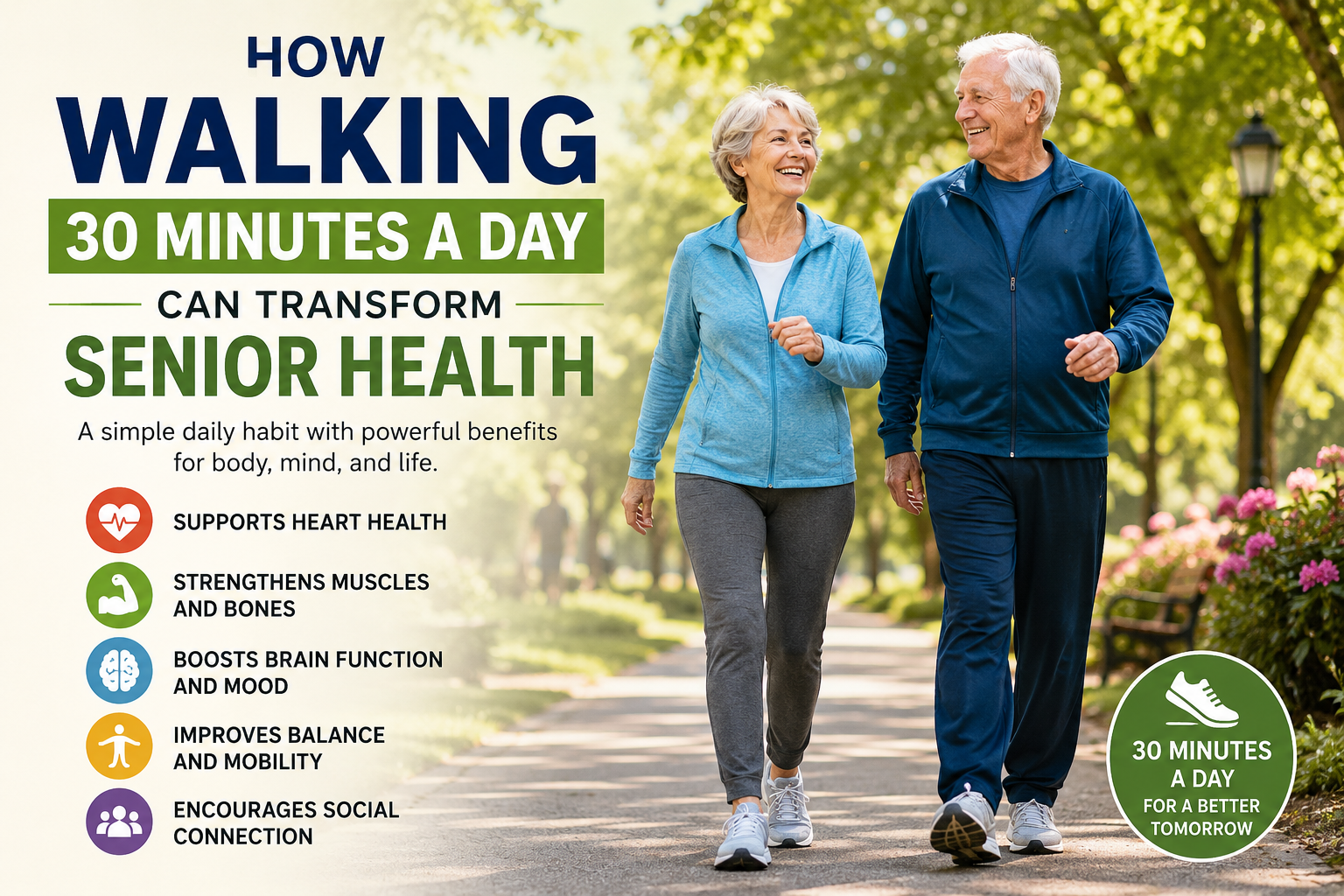
 As we age, maintaining good health becomes increasingly important. While there are countless fitness programs, supplements, and wellness trends promising better health, one of the most effective solutions is also one of the simplest: walking. For seniors, dedicating just 30 minutes a day to walking can have a remarkable impact on physical health, mental well-being, and overall quality of life.
Walking requires no expensive equipment, gym membership, or special training. It is a low-impact activity that can be adapted to different fitness levels and lifestyles. Whether it’s a stroll through the neighborhood, a walk in the park, or laps around a local mall, the benefits of walking are significant and supported by scientific research.
Improves Heart Health
Heart disease remains one of the leading health concerns among older adults. Regular walking can strengthen the heart and improve circulation throughout the body. Walking helps lower blood pressure, reduce bad cholesterol levels, and increase good cholesterol.
A daily 30-minute walk encourages healthy blood flow, reducing the risk of heart attacks and strokes. It also helps the body use oxygen more efficiently, making everyday activities feel easier and less tiring.
For seniors looking to protect their cardiovascular health, walking is one of the safest and most accessible forms of exercise available.
Helps Maintain a Healthy Weight
Weight gain can become more common with age due to slower metabolism and reduced physical activity. Carrying excess weight increases the risk of diabetes, heart disease, and joint problems.
Walking burns calories and helps maintain a healthy body weight. While it may not produce dramatic weight loss overnight, consistent walking contributes to long-term weight management. Combined with a balanced diet, a daily walking routine can help seniors maintain a healthier body composition and improve overall energy levels.
Strengthens Muscles and Bones
As people age, they naturally lose muscle mass and bone density. This process can lead to weakness, mobility issues, and a higher risk of fractures.
Walking helps keep muscles active and engaged. It strengthens the legs, hips, and core muscles that support balance and movement. In addition, weight-bearing activities like walking encourage the body to maintain stronger bones.
Regular walking can help seniors stay mobile and independent for longer, reducing the likelihood of age-related physical decline.
Reduces the Risk of Falls
Falls are one of the most common causes of injury among older adults. Poor balance, weak muscles, and reduced coordination often contribute to falls.
Walking regularly improves balance, posture, and coordination. It strengthens stabilizing muscles and enhances body awareness, making it easier to navigate uneven surfaces and everyday obstacles.
By improving physical stability, walking can help seniors reduce their risk of falls and maintain confidence in their daily activities.
Supports Joint Health
Many seniors worry that exercise may worsen joint pain, especially if they have arthritis. However, moderate walking is actually beneficial for joint health.
Walking helps lubricate the joints and improves flexibility. It increases blood flow to the surrounding tissues and strengthens the muscles that support the joints.
For many older adults, walking can reduce stiffness, ease discomfort, and improve overall mobility. The key is to start slowly and gradually increase activity levels as comfort improves.
Boosts Mental Health
Physical health is only part of the equation. Mental and emotional well-being are equally important as we age.
Walking stimulates the release of endorphins, often referred to as the body’s natural feel-good chemicals. These chemicals help reduce stress, anxiety, and symptoms of depression.
Many seniors find that walking outdoors provides additional benefits. Exposure to sunlight, fresh air, and natural surroundings can enhance mood and promote feelings of relaxation.
Even a simple daily walk can become a valuable opportunity to clear the mind and improve emotional well-being.
Enhances Brain Function
Research suggests that regular physical activity can help protect cognitive function as people age. Walking increases blood flow to the brain, delivering oxygen and nutrients that support healthy brain cells.
Studies have linked regular walking with improved memory, concentration, and problem-solving abilities. Some research also suggests that consistent physical activity may help lower the risk of cognitive decline and dementia.
For seniors interested in maintaining mental sharpness, walking offers a simple and effective strategy.
Improves Sleep Quality
Many older adults struggle with sleep-related issues such as insomnia or poor sleep quality. Lack of sleep can negatively affect mood, energy levels, and overall health.
Walking helps regulate the body’s natural sleep-wake cycle. Physical activity promotes relaxation and reduces stress, making it easier to fall asleep and stay asleep.
Seniors who walk regularly often report deeper, more refreshing sleep and greater energy during the day.
Encourages Social Interaction
Walking doesn’t have to be a solitary activity. Joining a walking group or walking with friends, family members, or neighbors can provide valuable social benefits.
Social interaction plays an important role in healthy aging. It helps reduce feelings of loneliness and isolation while providing emotional support and companionship.
A daily walk can become a social event that contributes to both physical and emotional wellness.
Increases Independence
One of the greatest concerns many seniors face is losing their independence. Walking helps preserve the strength, balance, and endurance needed for everyday activities such as shopping, household chores, and visiting friends.
By maintaining mobility and physical fitness, seniors are better equipped to continue living independently and enjoying an active lifestyle.
The confidence that comes from staying physically capable can have a powerful impact on overall quality of life.
Tips for Starting a Walking Routine
If you’re new to walking, start slowly and build gradually. Here are a few helpful tips:
- Begin with 10 to 15 minutes and increase your time each week.
- Wear comfortable, supportive walking shoes.
- Stay hydrated before and after your walk.
- Choose safe, well-lit walking routes.
- Walk with a friend for added motivation and safety.
- Listen to your body and rest when needed.
Consistency is more important than speed. The goal is to make walking a regular part of your daily routine.
Final Thoughts
Walking for just 30 minutes a day may seem like a small commitment, but the benefits can be life-changing for seniors. From improving heart health and strengthening muscles to boosting mood and supporting brain function, walking is one of the most powerful tools for healthy aging.
The best part is that almost anyone can do it. No complicated equipment, expensive memberships, or intense workouts are required. Just a comfortable pair of shoes and a willingness to take that first step.
By making walking a daily habit, seniors can enjoy better health, greater independence, and a higher quality of life for years to come.